Most people understand that a dark room helps them sleep better.
What many don't realise is that light is one of the most powerful factors controlling when we feel awake, when we feel sleepy and how well we sleep throughout the night.
From the moment you wake up to the moment you go to bed, light helps regulate your body's internal clock.
Understanding how light affects sleep can help you create an environment that supports deeper, more restorative rest.
What Is Your Circadian Rhythm?
Your circadian rhythm is your body's internal 24-hour clock.
It helps regulate many important functions, including:
‣ Sleep and wakefulness
‣ Hormone production
‣ Body temperature
‣ Energy levels
‣ Alertness and focus
This internal clock relies heavily on light signals from the environment.
When light enters the eyes, it sends signals to the brain that help determine whether it's time to be awake or asleep.
According to researchers, light is considered the most important external factor influencing circadian rhythms (Cajochen, 2007).
How Morning Light Helps You Wake Up
Exposure to bright light in the morning helps signal to the brain that the day has begun.
This process helps:
‣ Increase alertness
‣ Improve focus
‣ Support energy levels
‣ Reinforce a healthy sleep-wake cycle
Research has shown that morning light exposure plays an important role in regulating circadian rhythms and promoting healthy sleep patterns (Khalsa et al., 2003).
This is one reason why people often feel more awake after spending time outside shortly after waking.
How Evening Light Affects Sleep
As daylight fades, the body naturally begins producing melatonin.
Melatonin is often referred to as the "sleep hormone" because it helps signal that bedtime is approaching.
However, exposure to artificial light in the evening can interfere with this process.
Common sources include:
‣ Smartphones
‣ Tablets
‣ Televisions
‣ Computer screens
‣ Bright household lighting
Research has found that evening light exposure can suppress melatonin production, delay sleep onset and reduce feelings of sleepiness before bed (Chang et al., 2015).
In simple terms, your brain may think it's still daytime.
Why Darkness Matters
Darkness allows the body's natural sleep processes to take over.
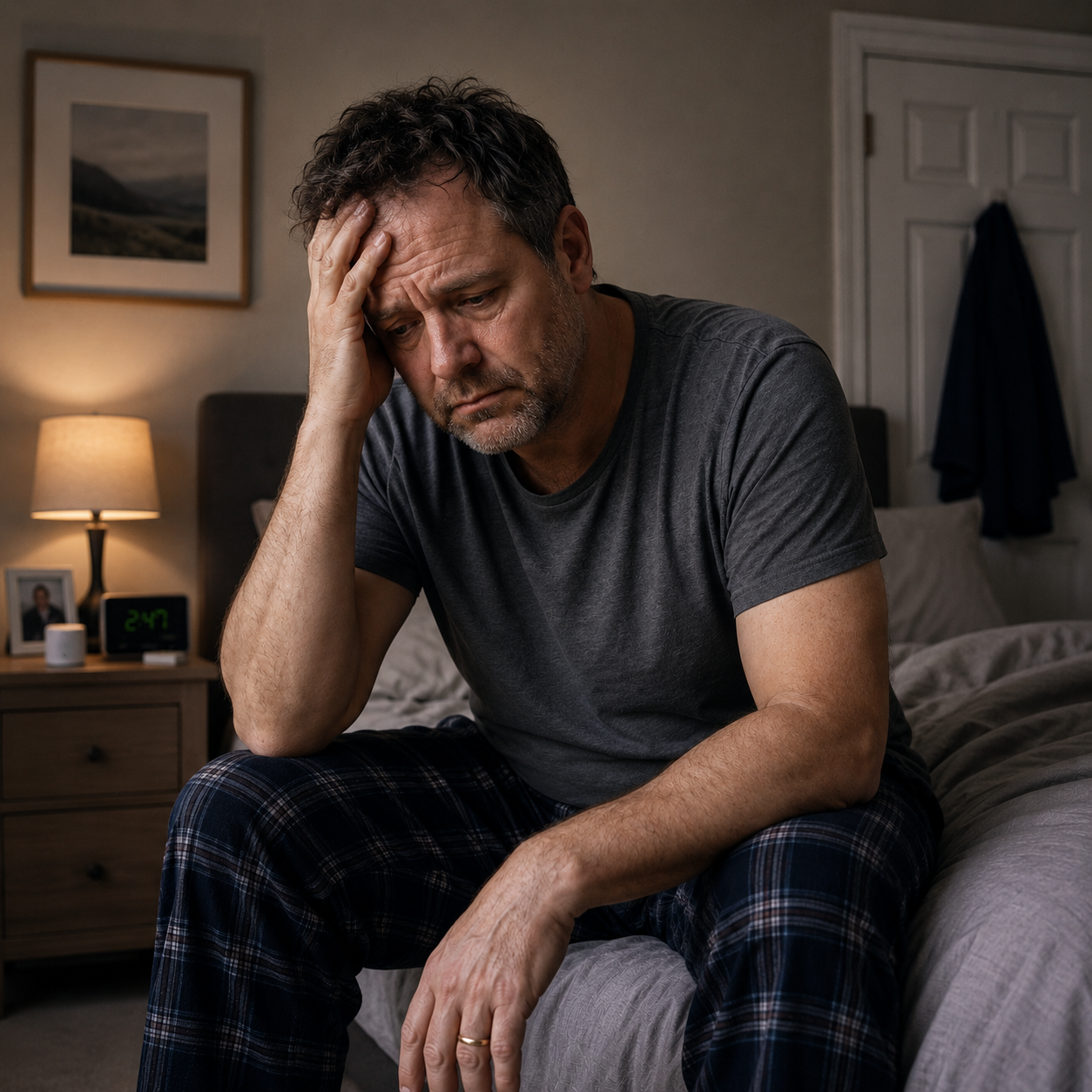
Even small amounts of unwanted light can disrupt sleep.
Common sources include:
‣ Streetlights outside the window
‣ Electronic devices
‣ Alarm clock displays
‣ Hallway lighting
‣ Early morning sunlight
Studies suggest that exposure to light during sleep may increase sleep disruption and reduce overall sleep quality (Cho et al., 2016).
Creating a darker sleeping environment may help support deeper, more consistent sleep.
The Link Between Light and Sleep Quality
Sleep isn't just about the number of hours you spend in bed.
Sleep quality is equally important.
Research suggests that excessive nighttime light exposure may be associated with:
‣ Increased sleep disturbances
‣ Reduced sleep efficiency
‣ Delayed sleep onset
‣ Greater daytime tiredness
Conversely, maintaining appropriate exposure to bright light during the day and reducing light exposure at night may support healthier sleep patterns (Cajochen, 2007).
Practical Ways to Reduce Light Disruption
Small changes can make a significant difference.
Use Blackout Solutions
Reducing external light sources can help create a darker sleep environment.
Limit Screen Time Before Bed
Reducing exposure to bright screens in the hour before sleep may help support natural melatonin production.
Dim Household Lighting
Using softer, warmer lighting in the evening can help signal to the body that bedtime is approaching.
Get Morning Light Exposure
Spending time outdoors shortly after waking may help reinforce a healthy circadian rhythm.
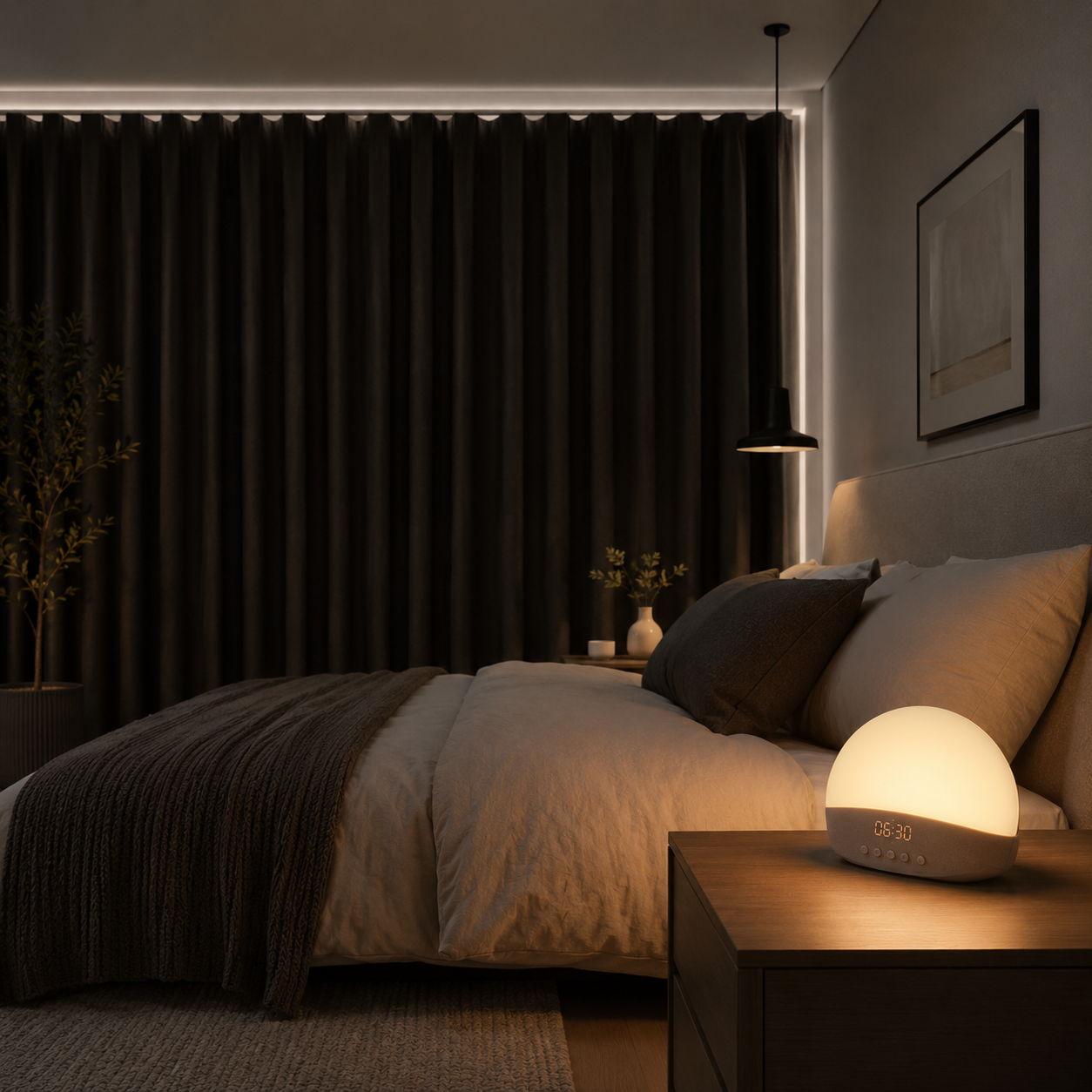
Consider a Sunrise Alarm Clock
Gradual light exposure in the morning can provide a gentler wake-up experience while helping regulate your body's internal clock.
Building a Sleep-Friendly Environment
Light is just one part of the sleep equation.
For best results, it should be considered alongside other important factors such as:
‣ Noise levels
‣ Bedroom comfort
‣ Temperature
‣ Breathing
‣ Evening routines
Together, these factors help create an environment where quality sleep can happen more consistently.
The Bottom Line
Your body relies on light to regulate when you feel awake and when you feel sleepy.
Getting enough natural light during the day while reducing unnecessary light exposure at night can help support a healthier circadian rhythm and better sleep quality (Khalsa et al., 2003; Chang et al., 2015).
Improving your sleep doesn't always require drastic changes.
Sometimes it starts with simply controlling the light around you.