
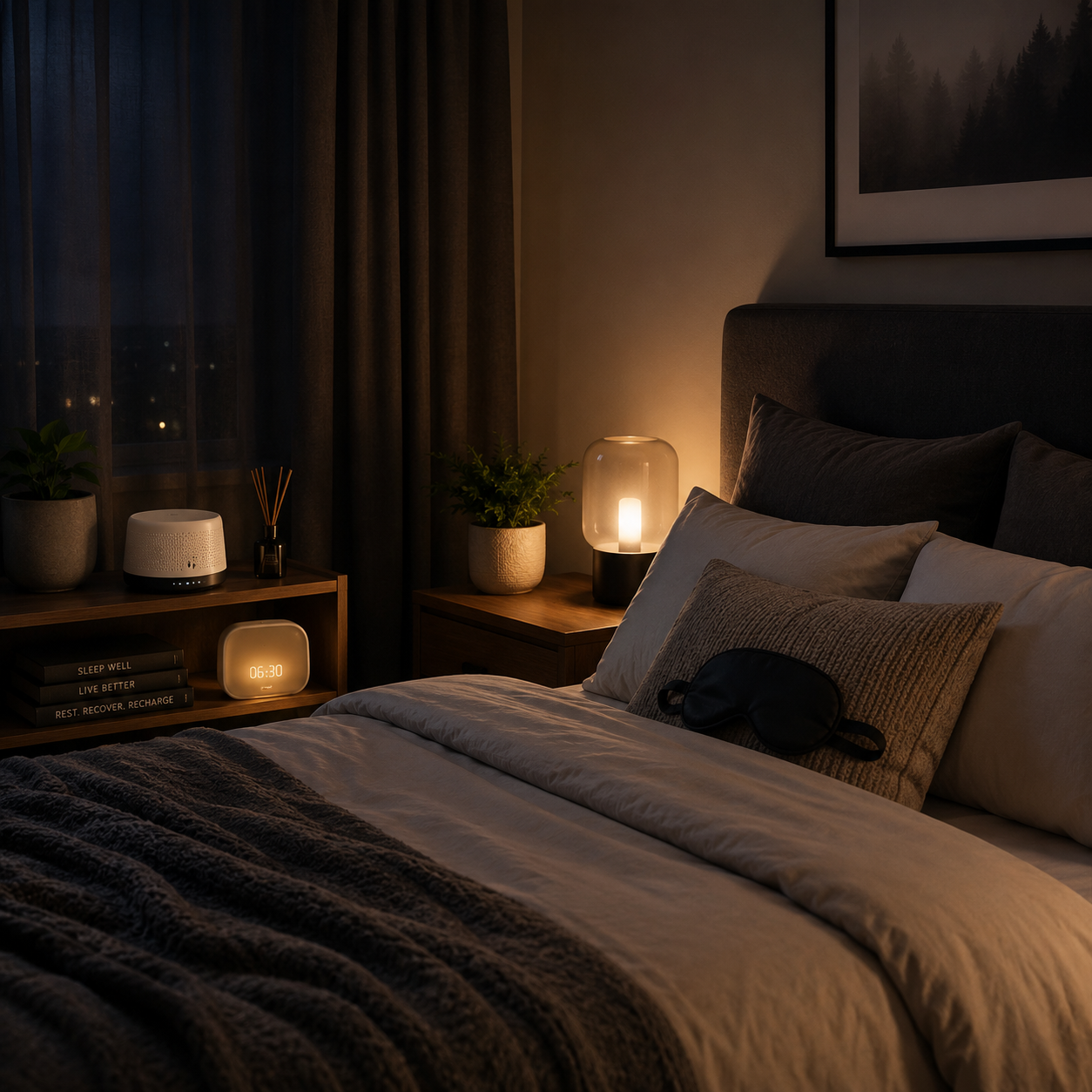
Most people focus on getting more hours of sleep.
But often, the real problem isn't how long you're sleeping—it's the environment you're sleeping in.
Even small disruptions throughout the night can affect sleep quality, leaving you feeling tired, unfocused and less resilient the next day.
Research suggests that factors such as light exposure, noise levels, comfort and bedroom routines can all influence sleep quality and overall wellbeing.
The good news?
Many of these factors are within your control.
Why Your Sleep Environment Matters
Your bedroom sends constant signals to your brain.
A bright room signals wakefulness.
Unexpected sounds trigger alertness.
An uncomfortable pillow can cause tossing and turning.
Poor airflow may lead to disrupted breathing and lower-quality sleep.
When several of these issues are present at the same time, they can have a cumulative effect on sleep quality.
Creating a sleep-friendly environment helps reduce those disruptions and gives your body the best possible chance of deep, restorative rest.
1. Reduce Light Exposure
Light is one of the strongest regulators of the body's internal clock, known as the circadian rhythm.
Exposure to light during the evening can suppress melatonin production, making it harder to fall asleep.
Even small amounts of artificial light from streetlights, electronics or early morning sunlight may affect sleep quality.
Simple ways to improve light control:
‣ Use blackout curtains where possible
‣ Reduce screen exposure before bed
‣ Wear a comfortable sleep mask
‣ Keep the bedroom as dark as possible
2. Minimise Background Noise
Noise doesn't always wake us fully.
However, research shows that sound can still disrupt sleep stages, even when we're not consciously aware of it.
Traffic, neighbours, televisions and household noises can all contribute to fragmented sleep.
Helpful solutions include:
‣ White noise machines
‣ Relaxing sleep sounds
‣ Consistent background noise
‣ Earplugs when appropriate
Creating a more consistent sound environment can help reduce unexpected disturbances throughout the night.
3. Improve Comfort and Support
Physical discomfort is one of the most common reasons people struggle with sleep.
An unsupportive pillow, poor sleeping position or pressure points can lead to frequent movement throughout the night.
A comfortable sleep setup helps reduce unnecessary disruptions and supports more restful sleep.
Areas worth considering:
‣ Pillow support
‣ Mattress quality
‣ Sleeping position
‣ Bedroom temperature
‣ Breathable bedding
Comfort isn't just about luxury—it's about removing barriers to quality rest.
4. Support Better Breathing
Breathing patterns can significantly influence sleep quality.
For some people, mouth breathing during sleep may contribute to dry mouth, snoring and disrupted sleep.
Nasal breathing is generally considered the body's preferred breathing route because it helps warm, filter and humidify incoming air.
Simple strategies that may help include:
‣ Improving bedroom air quality
‣ Managing congestion
‣ Encouraging nasal breathing habits
‣ Maintaining a comfortable sleeping position
If breathing difficulties persist, consulting a healthcare professional is recommended.
5. Create a Consistent Wind-Down Routine
The body benefits from predictable routines.
A regular evening routine helps signal that it's time to sleep.
This doesn't need to be complicated.
Many people find success with:
‣ Dimming lights
‣ Reading
‣ Relaxation techniques
‣ Listening to calming sounds
‣ Aromatherapy
‣ Consistent bedtimes
Small habits performed consistently often have a bigger impact than dramatic changes performed occasionally.
Small Changes Can Have a Big Impact
Better sleep doesn't always require a complete lifestyle overhaul.
In many cases, improving your sleep environment can make a meaningful difference.
Reducing light, managing noise, improving comfort, supporting healthy breathing and creating a consistent evening routine all help create the conditions for better sleep.
Because better sleep isn't just about spending more time in bed.
It's about creating an environment where your body can rest properly.